Strategy Is a Decision About What to Change
Strategy isn't a plan, a list of goals or a collection of initiatives. It is a decision about what to change. This article explains what that means and how to test whether you have one.
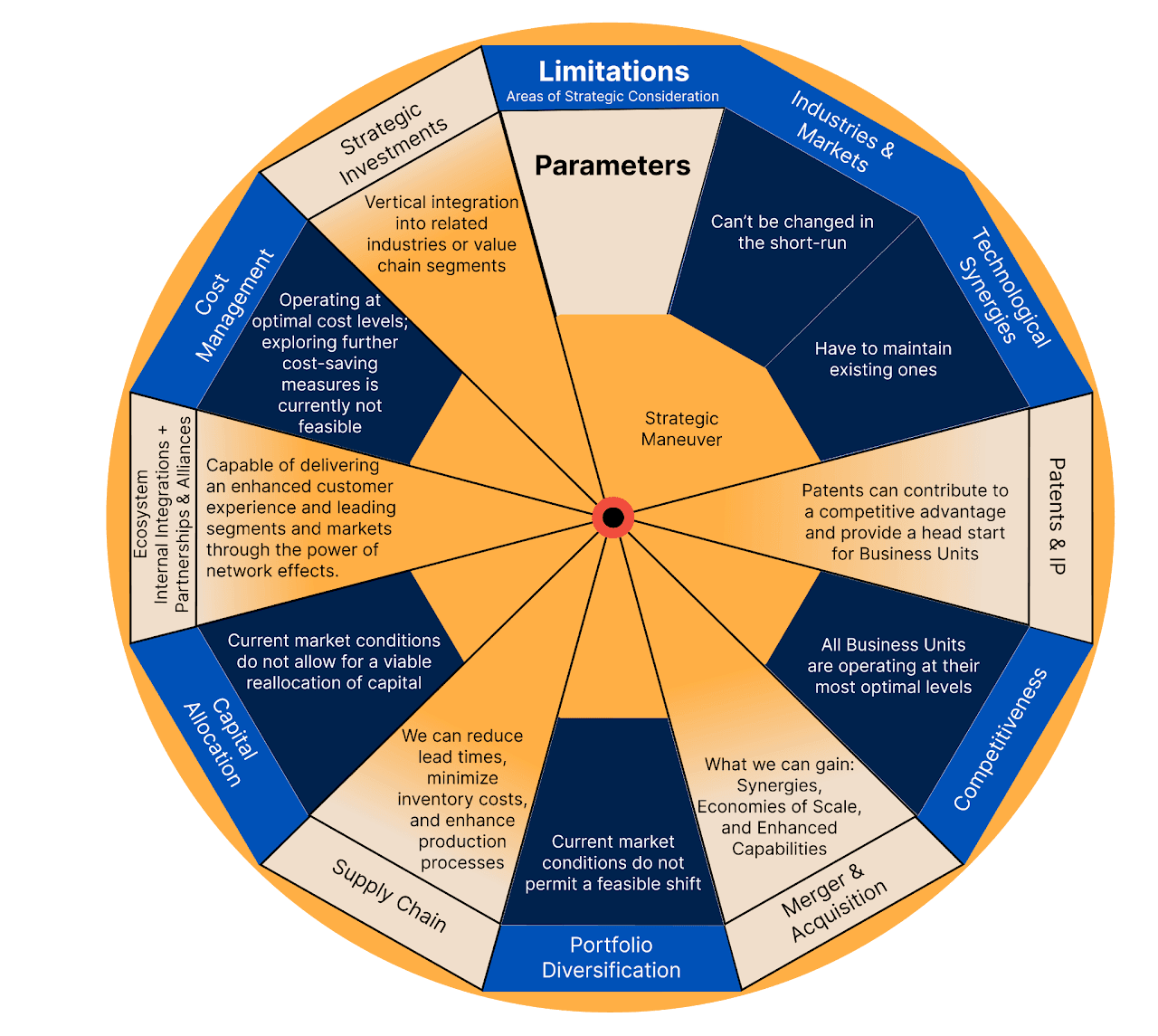
Strategy is a decision about what to change.
That definition moves the focus away from the strategy document and toward the decision itself. A strategy is good when it has actually decided what to change, why that change matters, and why those changes were chosen over the alternatives.
Strategy is one of the most commonly used words in business. Companies have strategy teams. Leaders hold strategy sessions. Consultants produce strategy documents. Organizations publish strategic priorities, strategic plans and strategic initiatives. Yet many still struggle to answer a basic question: what exactly is our strategy?
This article explains what strategy is, what it is not, and how to test whether you have one. For the step-by-step process, see How to Build a Business Strategy: A Practical Step-by-Step Framework.
Key takeaways
- Strategy is a decision about what to change, not a document, a plan or a list of goals.
- A goal says where you want to go. Strategy decides what has to change to get there.
- An initiative only counts as strategy when it expresses a deliberate choice.
- Strategy reduces possibilities. If nothing was left out, nothing was chosen.
- If you can't say what you chose, and why, you may have a plan without a strategy.
What is strategy?
Strategy is the direction an organization chooses to pursue, given the outcome it wants, the conditions it faces, and what it can realistically change.
That means strategy involves choice. An organization cannot change everything. It cannot pursue every opportunity, satisfy every stakeholder, respond to every external development and invest equally in every capability. Strategy exists because choices have to be made.
The strategic question is therefore not simply "What should we do?" It is:
Given where we want to go and the conditions we face, what should we change?
That is a much more demanding question.
Strategy is not the same as planning
Strategy and planning are closely connected, but they are not the same thing. Planning answers questions such as:
- What needs to happen?
- When will it happen?
- Who owns it?
- What resources are required?
- How will progress be measured?
Strategy answers a question that comes before those: what should we choose to change?
A plan can be extremely detailed and still rest on a weak strategic decision. For example, a company might have a sophisticated plan to increase sales by 20%, with targets, campaigns, hiring plans, budgets and KPIs. But none of those elements explains the strategic choice:
- Why should sales increase?
- Which customers should the company pursue?
- What needs to change in its offering?
- What competitive position should it create?
- What should it stop doing, or do differently?
Without those decisions, planning becomes an exercise in organizing activity rather than choosing direction. That is why strategy should precede planning. Once the choice is made, planning has a clear job: turning it into action. (See turning strategy into planning and execution.)
Strategy is not a list of goals
Goals describe outcomes you want. For example:
- Increase revenue by 30%.
- Enter three new markets.
- Improve customer retention.
- Reduce operating costs.
- Become the market leader.
These may be important objectives, but they are not strategy by themselves. A goal tells you where you want to go. Strategy helps determine what needs to change to get there.
Consider a company that wants to increase revenue by 30%. That outcome could lead to very different strategic choices. The company might:
- move into a new customer segment
- increase prices
- introduce a new product
- expand geographically
- build a stronger distribution channel
- improve customer retention
- acquire another company
- change its business model
The goal does not tell you which choice is right. Strategy is the process of making that choice.
Strategy is not a collection of initiatives
Organizations often describe strategy through initiatives:
- Launch the new product.
- Open the new region.
- Implement the new technology.
- Hire more salespeople.
- Redesign the website.
- Build an AI capability.
Initiatives describe actions. But an initiative is only strategically meaningful if it represents a deliberate choice about what the organization needs to change.
Consider two companies launching an AI product. For one, the strategic decision may be to change its position from a traditional software provider into an AI-enabled platform. For the other, the decision may be to use AI mainly to reduce delivery costs while keeping its existing market position.
Both companies launch AI products. The initiative looks similar. The strategy is not. This is why looking only at initiatives can make different strategies appear identical.
Strategy starts with the outcome
A strategic decision needs a direction, and that starts with the outcome the organization wants to achieve. The outcome might be:
- profitable growth
- market expansion
- improved competitiveness
- a stronger customer position
- a turnaround
- greater resilience
- a new business model
- a transformation of the organization
The outcome does not determine the strategy. It establishes what the strategy is trying to accomplish. From there, the organization needs to understand the conditions shaping the decision.
What shapes a strategic decision?
A strategic choice rarely exists in isolation. Four broad lenses, which the Strategic Decision Model calls Drivers, shape what an organization should consider.
Internal Competencies
What can the organization do particularly well?
This includes capabilities, assets, expertise, technology, relationships, brand strength, data, operating capabilities and other internal advantages.
Market Opportunities
Where could the organization create or capture value?
This includes customer needs, market changes, emerging categories, competitive gaps, new channels and changes in demand.
Stakeholder Interests
Who has an interest in the outcome?
Customers, employees, investors, partners, regulators, communities and other stakeholders can all influence which choices are viable or desirable.
External Factors
What is changing outside the organization?
Technology, regulation, economic conditions, social changes, geopolitical developments and other external forces can alter the strategic landscape.
These Drivers do not automatically tell an organization what strategy to choose. They provide the context in which the choice has to be made.
Then come the Limitations
Every strategy operates within Limitations. A Limitation is a condition that narrows the choices available to the organization. It might be:
- insufficient capital
- limited technical capability
- regulatory restrictions
- dependence on a major customer
- weak brand recognition
- a difficult cost structure
- limited geographic reach
- organizational resistance
- lack of talent
- an entrenched competitor
- a dependency on another part of the business
Limitations matter because strategy is not about identifying everything that would be desirable in an ideal world. It is about deciding what can realistically be changed under the conditions that exist.
A company may identify an attractive market opportunity, for example, but if entering that market requires capabilities it cannot realistically build or acquire, the opportunity may not be a viable strategic choice. (More on this in identifying the Limitations you have to work with.)
Identify what you can actually change
Once the outcome, context and Limitations are understood, the strategic question becomes more concrete: what can we change? This is where strategic possibilities become potential choices. These changes might involve:
- products
- customers
- pricing
- channels
- capabilities
- technology
- partnerships
- geographic focus
- operating models
- organizational structure
- brand position
- customer experience
- business models
The important point is that these are not automatically initiatives. They are Parameters of Change: areas where the organization may be able to alter its position or circumstances in pursuit of the desired outcome.
Not every possible change is a good strategic choice
Finding possible changes is only part of strategy. The organization then needs to evaluate them. A useful evaluation considers at least four dimensions:
- Impact: how much could this change contribute to the desired outcome?
- Feasibility: can the organization realistically make the change?
- Risk: what could go wrong, and how exposed would the organization be?
- Cost: what resources would the change require?
This prevents a common strategic mistake: choosing an option simply because it sounds attractive. A transformational opportunity with enormous potential may also be impossible to execute. A highly feasible initiative may have little strategic impact. A low-cost option may expose the organization to unacceptable risk. Strategy requires judgment across these trade-offs. (See evaluating your strategic options.)
Strategy is the choice
Eventually, the organization has to choose. Not everything can be a priority. Not every attractive option can be pursued. Not every Limitation can be removed. A strategy represents a selection from among possible changes.
This is one reason strategy is fundamentally different from brainstorming. Brainstorming increases the number of possibilities. Strategy reduces them. The strategic decision says:
These are the changes we believe matter most, under the conditions we face, and this is why we are choosing them.
That is the point at which strategy becomes meaningful.
Turn the decision into a Strategy Statement
Once the choice has been made, it should be possible to express the strategic direction clearly. A Strategy Statement should not simply repeat the company's ambition. It should communicate the chosen direction of change.
For example, instead of:
We will become the leading provider of digital financial services.
a more strategic statement explains the change in competitive position:
We will shift from competing primarily through product breadth to winning high-value customers through a differentiated digital experience and faster product innovation.
The second statement tells you something important: it tells you what is changing. That makes the strategy easier to evaluate, communicate and eventually translate into plans.
Strategy needs to stay connected across the organization
Strategic choice does not stop at the corporate level. Organizations typically make strategic decisions at multiple levels:
- Corporate strategy determines the overall direction of the organization.
- Business strategy determines how a business, market or business unit will compete.
- Functional strategy determines how functions such as marketing, product, technology, finance, operations or HR need to change to support the strategy.
These levels should not become separate strategy exercises. They need to remain connected. If the business strategy says the organization will compete through superior customer experience, but the functional strategies keep optimizing for cost reduction alone, the organization has a strategic alignment problem. The strategy may be sound. The organization is simply not pointed in the same direction. (See connecting business strategy to functional strategy.)
Strategy is a choice, not a forecast
Another common misconception is that strategy requires accurately predicting the future. It does not. Organizations cannot know exactly what the market, economy, technology or competitors will look like several years from now.
Strategic thinking is therefore not about pretending to know the future. It is about making the best decision possible given what is known, what is uncertain and what can be influenced. That means a strong strategy should also be able to withstand challenge:
- What assumptions are we making?
- What could invalidate the decision?
- Which changes are robust across different scenarios?
- Where should we remain flexible?
- What signals should cause us to reconsider?
A strategy that cannot be questioned becomes a commitment to the past rather than a response to the future. (See stress-testing the strategy.)
A simple test for whether you actually have a strategy
Try answering these five questions:
- What outcome are we trying to achieve?
- What conditions are shaping our choices?
- What Limitations are narrowing our options?
- What could we actually change?
- Which changes are we choosing, and why?
If the answers are clear, you probably have the foundations of a strategy. If the answers are vague, but the organization already has dozens of goals, initiatives and KPIs, you may have a plan without a strategy. That distinction matters.
Putting this into practice with StrategySOS
StrategySOS is built to make this decision visible. You set the outcome, work through the four Drivers, list your Limitations and the Parameters of Change available, score each option on impact, feasibility, risk and cost, and choose. The result is a Strategy Statement you can trace back through the reasoning that produced it, and carry down into Business, Functional and planning work.
The methodology page explains the Strategic Decision Model in detail, and Why StrategySOS explains why it exists.
Frequently asked questions
What is strategy in simple terms?
Strategy is a decision about what to change in order to move from the current situation toward a desired outcome, given the conditions and Limitations the organization faces.
What is the difference between strategy and planning?
Strategy determines what the organization should change and why. Planning determines how that strategic choice will be carried out, including actions, timing, ownership and measures.
Is a goal a strategy?
No. A goal describes a desired outcome. Strategy determines the choices and changes that will be pursued to achieve that outcome.
Are strategic initiatives the same as strategy?
No. Initiatives are actions. They become strategically meaningful when they are connected to a deliberate choice about what the organization needs to change.
Why does strategy require choices?
Because organizations have limited resources and cannot pursue every possible opportunity. Strategy requires deciding which changes matter most and which alternatives will not be pursued.
How do you know if you have a strategy?
Ask five questions: what outcome are we trying to achieve, what conditions are shaping our choices, what Limitations are narrowing our options, what could we actually change, and which changes are we choosing and why. If the answers are clear, you have the foundations of a strategy. If they are vague, you may have a plan without one.
Can AI create a strategy?
AI can help analyze information, identify possibilities, compare options, challenge assumptions and model scenarios. But strategic choice ultimately requires judgment about what matters to the organization and what it is willing and able to change.
Strategy is ultimately about choice
The word "strategy" can make the process sound more complicated than it needs to be. At its core, strategy is about making a consequential choice.
You have an outcome you want. You face conditions you cannot completely control. You have Limitations. You have things you can change. You have more possible changes than you can realistically pursue. So you choose.
Strategy is a decision about what to change. The quality of that decision depends on the quality of the reasoning behind it. And once the decision is made, planning has a much clearer job: turning that choice into action.