How to Align Functional Strategy With Business Strategy
Alignment doesn't mean every function repeats the business strategy. It means the choices at each level are connected, and that the connection can be seen and challenged. Here is a practical six-step way to achieve it.
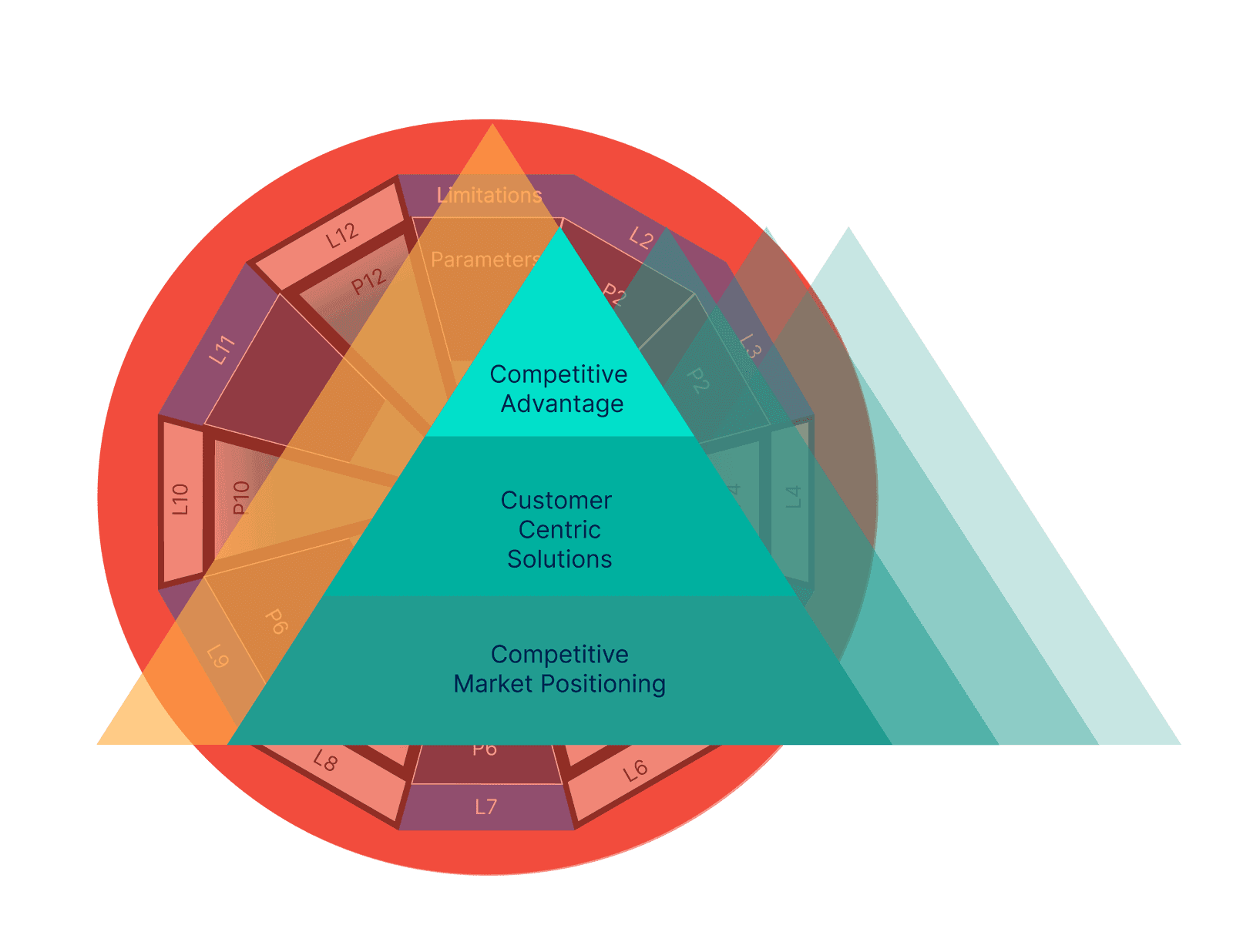
Strategic alignment means the strategic choices made at different levels of an organization are connected. The business strategy establishes a direction. The functional strategy determines what the function needs to change to contribute to that direction. The connection between the two should be visible and defensible.
"Alignment" appears in almost every strategy discussion. Leadership teams talk about strategic alignment. Business units are expected to align with corporate strategy. Functions are asked to align their plans with business priorities. But what does alignment actually mean?
It does not mean that every strategy should use the same language. It does not mean that Marketing, Product, Operations and Finance should all have identical priorities. And it does not mean that every function should simply take the business strategy and turn it into a list of tasks. (If the three levels of strategy are new to you, start with Corporate vs. Business vs. Functional Strategy: What's the Difference?.)
Key takeaways
- Alignment happens through connected choices, not through shared wording.
- Ask each function what it needs to change because of the business strategy, not how it can "support" it.
- Connect the Limitations behind each level's choices, not just the strategy statements.
- Alignment should work upward as well as downward: a function can discover something that changes the strategy above it.
- Alignment should be visible and examinable, not declared on a slide.
- Cross-functional dependencies are a planning and collaboration question, not a reason to fold everything into the strategy.
The six steps at a glance
- Establish the business outcome. What is the business trying to achieve?
- Identify the business Limitations. What conditions are shaping or constraining the decision?
- Identify the functional implications. What does this situation mean for each function?
- Identify possible changes. What could the function actually change?
- Choose the functional direction. Which changes best contribute to the business outcome?
- Connect the strategy to planning. Translate the choice into objectives, owners and measures.
The rest of this guide explains how to do each one.
What is strategic alignment?
Strategic alignment is the connection between strategic decisions made at different levels of an organization. A typical hierarchy looks like this:
Corporate strategy → Business strategy → Functional strategy → Plans and execution
Corporate strategy provides direction for the organization. Business strategy determines how a business or market will pursue that direction. Functional strategy determines what a significant function needs to change to support it. Planning then translates those strategic choices into objectives, activities, ownership and measures.
The important point is that alignment happens through the choices, not simply through the words used to describe them.
Alignment does not mean copying the strategy above
This is one of the most common mistakes. Imagine a business strategy says:
Win the premium customer segment through a differentiated customer experience.
A poorly aligned organization might tell every function to repeat that statement. Marketing: "Win the premium customer segment through a differentiated customer experience." Product: the same. Operations: the same. That may look aligned in a strategy document. It does not tell anyone what each function should actually change.
A better approach is to ask what the business strategy means for each function:
- Marketing might decide to shift toward a narrower, higher-value audience.
- Product might decide to prioritize features that create a differentiated experience for that audience.
- Operations might decide to redesign service processes that undermine the premium experience.
- Technology might decide to remove infrastructure constraints that prevent a more personalized experience.
The strategies are different. The direction is connected. That is alignment.
Start with the business decision
Before creating a functional strategy, make sure the business strategy is clear. A functional team should be able to answer:
- What outcome is the business trying to achieve?
- What strategic direction has the business chosen?
- What conditions are shaping that decision?
- What Limitations are making the decision necessary?
- What changes has the business decided to pursue?
If those questions are unclear, asking functions to "align" is premature. They will fill the gap with their own assumptions. That is how organizations end up with functional strategies that are individually reasonable but collectively disconnected.
Then ask: what does this mean for the function?
Once the business strategy is understood, the functional question becomes: what does this function need to change to contribute to the business strategy?
This is more useful than asking "How can Marketing support the business strategy?" because "support" can mean almost anything. The more precise question is: what needs to change within this function because of the business strategy? That forces the function to make a strategic choice. Depending on the function, the answer might involve:
- Marketing: target audience, positioning, channels, demand generation, brand, customer lifecycle, sales alignment, how pricing is communicated.
- Product: product portfolio, prioritization, customer experience, roadmap, technology capabilities, product model.
- Operations: processes, capacity, delivery model, service levels, supply chain, operating capabilities.
The specific choices depend on the business. There is no universal functional strategy that can simply be copied from one organization to another.
Use the same strategic logic at every level
One way to make alignment more rigorous is to use a consistent decision process at each level. The basic questions remain:
- What outcome are we trying to achieve?
- What is shaping our choices?
- What Limitations are narrowing our options?
- What can we change?
- Which changes should we choose?
The answers become more specific as you move down the organization:
- Business: "We need to increase penetration in the enterprise segment."
- Marketing: "Our current demand model is optimized for volume rather than enterprise account penetration."
- Product: "Our product packaging makes enterprise adoption unnecessarily difficult."
- Operations: "Our implementation model cannot support the service expectations of larger accounts."
Each function is identifying its own strategic problem. But those problems are connected to the business direction.
Connect Limitations, not just strategy statements
One of the strongest ways to create alignment is to connect the conditions driving the strategic choices. Consider a simplified example. A business-level Limitation:
Enterprise growth is constrained by a lack of differentiated value for large accounts.
That Limitation can lead to functional Limitations:
Marketing: Our positioning does not clearly communicate differentiated enterprise value.
Product: The product experience does not sufficiently address enterprise requirements.
Operations: Implementation processes are not designed for complex enterprise deployments.
These are not the same Limitation, and they should not be. But they are related. The business-level condition provides context for the functional-level conditions. That creates a traceable chain of reasoning.
From Limitations to changes
The next step is to ask what each function can actually change. These are the function's Parameters of Change.
- Marketing might reposition the offering around enterprise outcomes, concentrate demand generation on selected accounts, redesign the enterprise value proposition, or build a more account-specific customer journey.
- Product might prioritize enterprise capabilities, simplify enterprise configuration, redesign key workflows, or create a clearer enterprise product architecture.
- Operations might establish a dedicated enterprise implementation model, change onboarding processes, or create specialized service capabilities.
The function still needs to evaluate these. Not every possible change deserves to become part of the strategy.
Evaluate functional choices, don't just inherit them
A functional strategy still involves trade-offs. A function can evaluate potential changes on four dimensions:
- Impact: how much could this change contribute?
- Feasibility: can we realistically make the change?
- Risk: what could go wrong?
- Cost: what resources will it require?
This matters because alignment does not mean accepting every request from the business. Suppose the business wants to enter a new market. Marketing might determine that a proposed acquisition strategy has insufficient feasibility given the available budget. Product might determine that a requested localization cannot be delivered within the required timeframe. Operations might determine that the proposed service model creates unacceptable execution risk.
Those findings should not be treated as resistance to strategy. They are strategic information. Functional strategy can expose constraints that require the business strategy itself to be reconsidered. (See evaluating your strategic options.)
Alignment should work upward as well as downward
Strategy is often treated as a one-way cascade: the CEO decides, business units receive, functions execute. Real organizations are more complicated. A functional team may discover something that changes the strategic decision above it:
- Marketing may discover that customers value something the business had underestimated.
- Product may discover that a critical capability cannot be built within the required timeframe.
- Operations may discover a capacity limitation that changes the economics of a proposed expansion.
- Finance may identify an investment constraint.
These discoveries can challenge the business strategy. So alignment should not mean that lower levels are prohibited from questioning higher levels. The strategy should be connected enough that new information can travel back up the chain.
Not every functional issue is a strategic issue
This is where organizations can also go too far. Suppose Marketing and Sales need to agree on lead definitions. That is important. Suppose Product and Engineering need to coordinate a release. Also important. Suppose Marketing and Product need to coordinate messaging around a launch. Again, important. But these are not necessarily strategic alignment issues. They may simply be operating dependencies.
A useful distinction:
- Strategic alignment asks: are our strategic choices pointing in the same direction?
- Cross-functional collaboration asks: what do these teams need from one another to execute those choices?
Those are related, but they are not the same problem. Keeping the distinction clear prevents strategy from becoming an enormous dependency map.
Strategic alignment versus functional dependencies
Functional dependencies are real. Marketing may depend on Product. Product may depend on Technology. Sales may depend on Marketing. Operations may depend on Supply Chain. But a dependency does not automatically mean that two functions need identical strategies, or that the dependency belongs inside the strategic hierarchy.
In many cases it is more useful to surface the dependency as context for collaboration. The strategy determines the direction. The plans determine how functions work together to deliver it. This distinction becomes especially important as organizations become more complex. Otherwise, strategic frameworks can become so detailed that the strategic decision itself gets buried.
A practical alignment framework
A useful alignment process can be reduced to six steps.
Step 1: Establish the business outcome
What is the business trying to achieve? Make the outcome specific enough that functional leaders can understand what success means.
Step 2: Identify the business Limitations
What conditions are shaping or constraining the business decision? These provide the context for functional strategy.
Step 3: Identify functional implications
Ask each function: what does this business situation mean for us? Which conditions create a meaningful strategic problem for the function?
Step 4: Identify possible changes
What could the function actually change? Avoid jumping immediately to projects and tasks. First identify the strategic changes available.
Step 5: Choose the functional direction
Evaluate the alternatives and choose the changes that best contribute to the business outcome.
Step 6: Connect the strategy to planning
Only after the functional direction is clear should the organization translate it into objectives, initiatives, owners, budgets, milestones, measures and dependencies. This sequence keeps the strategic decision ahead of the execution plan. (See turning strategy into planning and execution.)
What does good strategic alignment look like?
Good alignment should allow someone to trace a functional decision back to the business strategy. For example:
- Business outcome: increase enterprise revenue.
- Business strategic choice: compete more effectively for high-value enterprise customers through differentiated experience and service.
- Marketing strategic choice: shift from broad lead-volume acquisition toward concentrated enterprise account growth and differentiated enterprise positioning.
- Product strategic choice: prioritize capabilities that remove the most significant barriers to enterprise adoption.
- Operations strategic choice: build a delivery model capable of supporting complex enterprise customers.
- Functional plans: objectives, initiatives, owners, budgets and measures.
Each layer is different. But the logic is visible.
What happens when alignment is missing?
Misalignment often looks like this:
- Business strategy: move upmarket.
- Marketing: maximize low-cost lead volume.
- Product: prioritize features based primarily on existing user requests.
- Sales: focus on the easiest deals to close.
- Operations: optimize for low-cost delivery.
Each function may be doing its job. The organization may even hit individual functional KPIs. But collectively, the functions are not necessarily pursuing the same strategic direction. This is why functional performance alone cannot tell you whether the organization is strategically aligned.
How can you tell whether a functional strategy is aligned?
Ask five questions:
- What business outcome is this strategy contributing to? If the connection is unclear, investigate.
- Which business condition or Limitation does it address? If there is no meaningful connection, the functional strategy may be operating independently.
- What is the function actually changing? If the answer is simply a list of activities, the strategic choice may not be clear.
- Why were these changes chosen over alternatives? A strategy requires choice.
- Could the business strategy change while the functional strategy remained exactly the same? If yes, ask whether the functional strategy is genuinely connected to the business direction.
These questions do not prove that a strategy is right. They make its reasoning visible.
Alignment should be visible, not assumed
One of the problems with traditional strategy processes is that alignment is often declared rather than demonstrated. A business leader says, "Everything is aligned." Then each function produces its own strategy document. The documents are reviewed independently. Eventually someone presents a slide showing arrows connecting them. That is not necessarily alignment.
A stronger approach is to make the connection part of the strategy itself. If a functional Limitation is caused or shaped by a business-level Limitation, show that relationship. If a functional choice addresses that Limitation, make the relationship clear. If a functional strategy has no meaningful connection to the level above, that should also be visible. Alignment becomes something that can be examined rather than something that has to be asserted.
AI can help identify connections, but it should not decide them
This is also an area where AI can be useful. AI can examine strategies at different levels and suggest:
- possible connections between Limitations at different levels
- Limitations that have no link yet
- relationships between peer functions
- drift between what was stated at the outset and what has since been built
But the strategist should remain in control. A suggested connection is not the same thing as an accepted strategic relationship. The person responsible for the strategy should be able to accept it, choose a different connection, or leave it unlinked. That matters because deliberate divergence can sometimes be strategically correct.
Deliberate divergence is not always misalignment
A functional strategy may legitimately depart from the assumptions of the business strategy. Perhaps the market has changed. Perhaps new information has emerged. Perhaps a functional capability has become a competitive advantage. Perhaps a Limitation was misunderstood.
The answer should not be to force the function back into alignment. Instead, the divergence should become visible and be examined. Sometimes the right conclusion is that the functional strategy is wrong. Sometimes it is that the business strategy needs to change. That is why alignment should be treated as an active strategic discipline rather than a compliance exercise.
The real purpose of strategic alignment
The purpose of alignment is not to make the organization agree on everything. It is to make sure that important strategic choices are connected. Corporate strategy provides direction. Business strategy turns that direction into competitive choices. Functional strategy determines what significant functions need to change. Planning coordinates the work required to make those changes. And when something at a lower level challenges the assumptions above it, the organization should be able to see that too.
The result is not a perfectly synchronized organization. It is an organization where people can explain:
- What are we trying to achieve?
- What have we decided to change?
- Why did we choose those changes?
- How does this decision connect to the strategy above us?
- Where do we depend on other functions to make it work?
That is a much more useful definition of strategic alignment.
Putting this into practice with StrategySOS
StrategySOS is built to make alignment something you can examine rather than something you declare:
- Link Limitations upward. Every Limitation can be linked to a Limitation at the level above (Functional to Business, Business to Corporate). StrategySOS suggests a likely parent where it can, and Link all recommended accepts those suggestions in one step. You can always choose a different parent or leave a Limitation unlinked.
- See the whole chain. The Strategic Alignment View shows each level's Strategy Statement from Corporate down to every active function, with a count of how many Limitations are linked upward and which are not.
- Missing links have a visible cost. A Parameter whose Limitation is not linked upward is scored with a discount, so an unaligned choice ranks lower and the reason is on screen.
- Connect peer functions. When a functional Limitation has no natural parent above it, AI can suggest a link to a peer function instead. You accept or unlink each one.
- Check for drift. A narrative drift check compares what you built with what you stated at setup. It is informational: a deliberate pivot is often the point.
- Keep dependencies out of the strategy hierarchy. Functional Strategy Mapping notes where one function depends on another, as a reminder to coordinate. In Planning Station, Connected Plans shows how plans relate to each other, so cross-functional dependencies are handled through collaboration instead of being forced into the strategy itself.
- Look across levels. Scenario Analysis checks coherence across every Strategy Statement you have built and flags exposures at a higher level that nothing below addresses.
AI suggestions are always drafts. You accept, change or reject them. The methodology page explains the Strategic Decision Model, and Why StrategySOS explains why it exists.
Frequently asked questions
What is strategic alignment?
Strategic alignment is the connection between strategic choices at different organizational levels, so that functional and business strategies contribute to a coherent overall direction.
How do you align functional strategy with business strategy?
Start with the business outcome and strategic choices, identify the business Limitations shaping them, determine what those conditions mean for each function, identify possible functional changes, choose the most appropriate changes, and then translate those choices into functional plans.
Should functional strategy be identical to business strategy?
No. Functional strategy should be connected to business strategy, not copied from it. Each function faces different strategic conditions and therefore may make different strategic choices.
What is the difference between strategic alignment and collaboration?
Strategic alignment concerns whether strategic choices point in the same direction. Collaboration concerns how teams work together to execute those choices. Cross-functional dependencies often belong in planning and collaboration rather than in the strategy itself.
Can a functional strategy challenge the business strategy?
Yes. Functional teams can uncover new Limitations, opportunities or risks that challenge assumptions at the business or corporate level. Alignment should allow those insights to travel upward.
Does every function need a functional strategy?
No. A function needs its own strategy when it faces meaningful strategic choices about what it needs to change. Some functions may only need a plan for executing an established direction.
How can AI help with strategic alignment?
AI can suggest possible connections between Limitations at different levels, links between peer functions, and drift between what was stated and what was built. Those suggestions should be reviewed and accepted, changed or rejected by the strategist.